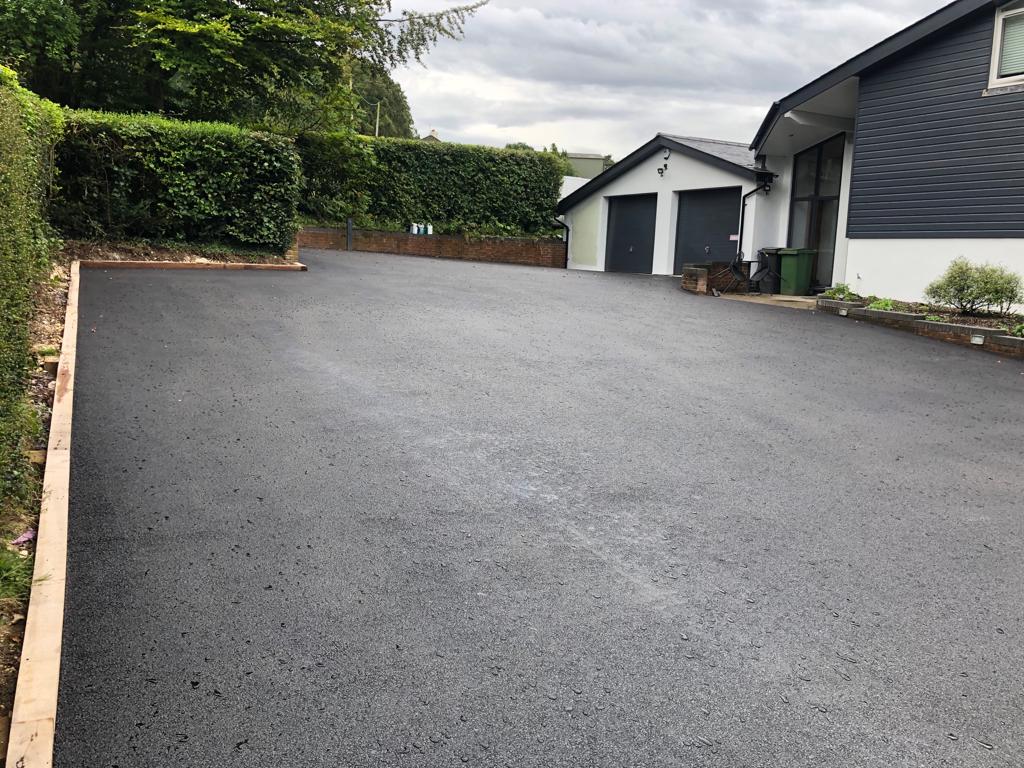
Crumbling along the edges of an asphalt surface can begin as a relatively minor defect, but it should not be dismissed as an appearance issue. The edge of a driveway, access road, car park or hardstand relies on adequate support from both the pavement structure and the adjoining ground. When that support is lost, pieces of asphalt can begin breaking away and the deterioration can gradually move further into the usable surface.
For property owners and businesses in Craigieburn, VIC, the appropriate solution depends on why the edge is failing. Localised repairs may be sufficient in some situations, while deteriorated foundations, drainage problems or widespread pavement damage may require more extensive preparation and resurfacing.
Craigieburn Road Tech approaches edge deterioration by considering the condition of the complete pavement rather than simply covering the visible damage.
Why Do Asphalt Edges Start to Crumble?
Asphalt performs best when it is installed over a stable, properly prepared foundation. The outer edge of the pavement can be particularly vulnerable because it does not always have the same lateral support as areas further towards the centre.
Once an edge begins to weaken, vehicle movements and weather exposure can progressively loosen additional material.
Common contributing factors include:
- Inadequate support beneath the pavement edge
- Erosion of adjoining ground
- Water flowing along or underneath the asphalt
- Vehicles repeatedly travelling over unsupported edges
- Poor compaction during pavement preparation
- Ageing and cracking of the asphalt
- Movement within the underlying base
Identifying which of these factors is contributing to the problem is important before deciding how the pavement should be repaired.
Loss of Edge Support Can Lead to Progressive Failure
The ground immediately beside an asphalt surface can play an important role in supporting the pavement boundary.
If this adjoining material washes away, settles or becomes disturbed, the asphalt can be left partially unsupported. Vehicle tyres passing close to the edge then place pressure on a section that has less support underneath it.
Small cracks may appear first. These can gradually widen until pieces of asphalt begin separating from the pavement.
If deterioration continues, the usable width of the surface can progressively reduce.
Water Should Be Considered When Edges Are Failing
Water can contribute significantly to edge deterioration.
Rainfall that repeatedly runs along the side of a pavement can erode supporting material. Water may also enter existing cracks and reach the road base underneath.
If the supporting material becomes unstable, the asphalt above can begin cracking and breaking away.
Look for Signs of Drainage Problems
Edge damage accompanied by the following conditions may indicate that water management needs attention:
- Erosion beside the asphalt
- Channels forming along the pavement boundary
- Water collecting close to damaged sections
- Soft material beside the road after rainfall
- Potholes forming near the edge
- Cracks extending inwards from the pavement boundary
Repairing the asphalt without addressing an ongoing drainage problem can leave the same section vulnerable to further deterioration.
Traffic Can Accelerate Edge Breakdown
Vehicle position matters, particularly on narrower roads, driveways and access areas.
When tyres regularly travel very close to the pavement boundary, the outer section experiences repeated loading. If the edge is already unsupported or cracked, this loading can accelerate the breakdown.
Heavy vehicles can place even greater demands on vulnerable sections.
Turning movements can also contribute because tyres apply forces across the pavement rather than simply travelling in a straight line.
Should Vehicles Be Kept Away From a Damaged Edge?
Where practical, limiting traffic over a visibly weakened edge can help prevent additional pieces from breaking away before repairs are completed.
However, this does not resolve the cause of the problem. If the foundation has deteriorated or adjoining material has eroded, the affected section still needs appropriate attention.
Can Crumbling Asphalt Edges Be Repaired?
Yes. Where deterioration remains localised and the surrounding pavement is structurally sound, damaged edges can often be repaired.
The correct process depends on how far the deterioration extends.
A professional repair may involve removing loose and unstable asphalt rather than attempting to bond new material directly to crumbling sections. The pavement underneath can then be inspected and prepared as required before the damaged area is restored.
Stable Material Is Essential for a Successful Repair
New asphalt needs a dependable foundation.
If loose material is left underneath or beside a repair, vehicle loading can cause movement to continue. This can result in cracking between the repair and existing pavement or allow the outer section to fail again.
Preparation may therefore involve:
- Removing deteriorated pavement
- Reinstating failed base material
- Compacting the repaired section
- Restoring appropriate pavement levels
- Correcting drainage where required
- Providing suitable support around the edge
The aim is to restore the structural integrity of the affected section, not simply improve its appearance.
When Does Edge Damage Suggest a Larger Pavement Problem?
Crumbling around one small section of otherwise sound asphalt may remain a localised issue. When deterioration occurs along substantial lengths of pavement, however, the condition of the wider surface should be considered.
Warning signs include:
- Long sections of broken pavement edge
- Cracking extending well into the asphalt
- Several potholes developing nearby
- Rutting or sinking within regular wheel paths
- Widespread surface deterioration
- Repaired edges repeatedly failing
- Movement within the pavement under traffic
These conditions can indicate that the issue extends beyond the outermost strip of asphalt.
Resurfacing May Be Appropriate When Wear Is More Widespread
An ageing asphalt surface can sometimes remain structurally serviceable underneath even though the upper pavement has become extensively worn.
Where this is the case, resurfacing may provide a practical way to restore the surface after damaged and unstable sections have been prepared correctly.
Resurfacing should not simply be applied over failing edges. Areas that lack support need to be repaired first so the new asphalt has an appropriate foundation.
Reconstruction May Be Needed in Severely Failed Sections
If the underlying base has deteriorated significantly, deeper reconstruction may be necessary in individual sections.
This can involve removing failed pavement materials until a stable foundation is reached and rebuilding the affected area before the asphalt surface is reinstated.
Importantly, severe damage in one location does not automatically mean the entire pavement needs reconstruction. A professional assessment can establish how far the underlying failure actually extends.
Good Grading Can Help Protect Asphalt Edges
Correct grading influences how water travels across and away from the pavement.
An asphalt surface should have suitable levels and falls so rainfall does not continually concentrate around vulnerable boundaries.
The surrounding ground also matters. Poorly shaped adjoining areas can direct runoff towards the asphalt or allow water to remain against its edges.
Considering grading as part of repair work can therefore help address one of the potential causes of repeated deterioration.
Early Repairs Can Help Contain the Damage
Edge failure can become progressively more difficult to contain once substantial sections begin breaking apart.
When an initial crack develops, water can enter and traffic can place additional pressure on the weakened pavement. As pieces break away, a new unsupported edge is created further inside the surface.
This cycle can allow deterioration to gradually advance.
Addressing edge problems while they remain relatively localised can help preserve pavement that is still structurally sound.
What Should You Look for During Routine Checks?
Property owners do not need to wait until large pieces of asphalt have disappeared before paying attention to pavement edges.
Early warning signs can include:
- Fine cracks close to the boundary
- Small pieces of loose asphalt
- Gaps developing beneath the edge
- Adjoining ground washing away
- Minor sections beginning to sag
- Water repeatedly flowing beside the pavement
Monitoring these changes makes it easier to arrange an assessment before a small defect develops into broader deterioration.
Why Professional Assessment Matters
A crumbling asphalt edge tells you where deterioration is visible, but it does not necessarily explain why it is happening.
At Craigieburn Road Tech, we assess asphalt surfaces in Craigieburn, VIC, with attention to pavement support, drainage, grading, traffic patterns and the condition of surrounding areas. This helps determine whether the appropriate response is a targeted edge repair, additional base preparation or more extensive asphalt resurfacing.
Addressing the cause as well as the visible damage provides a more considered approach to restoring the pavement.
Conclusion
Asphalt that is crumbling around the edges can often be repaired, particularly when deterioration is identified before it spreads extensively into the pavement. The important step is determining why the edge has failed.
Loss of support, erosion, water penetration, repeated vehicle loading and deterioration of the underlying base can all contribute. Simply placing new asphalt over loose or unstable material may leave these problems unresolved.
For property owners and businesses in Craigieburn, VIC, Craigieburn Road Tech provides professional asphalt and bitumen resurfacing and repair services based on the actual condition of the pavement. If the edges of your asphalt surface are beginning to crack, crumble or break away, contact our team to arrange an assessment and determine an appropriate repair or resurfacing solution.
Call us on: 03 4159 2883
Click here to find out more about Craigieburn Road Tech
Click here to complete our contact form and see how we can help with your driveway needs.